Bruno Pedroso
Summary
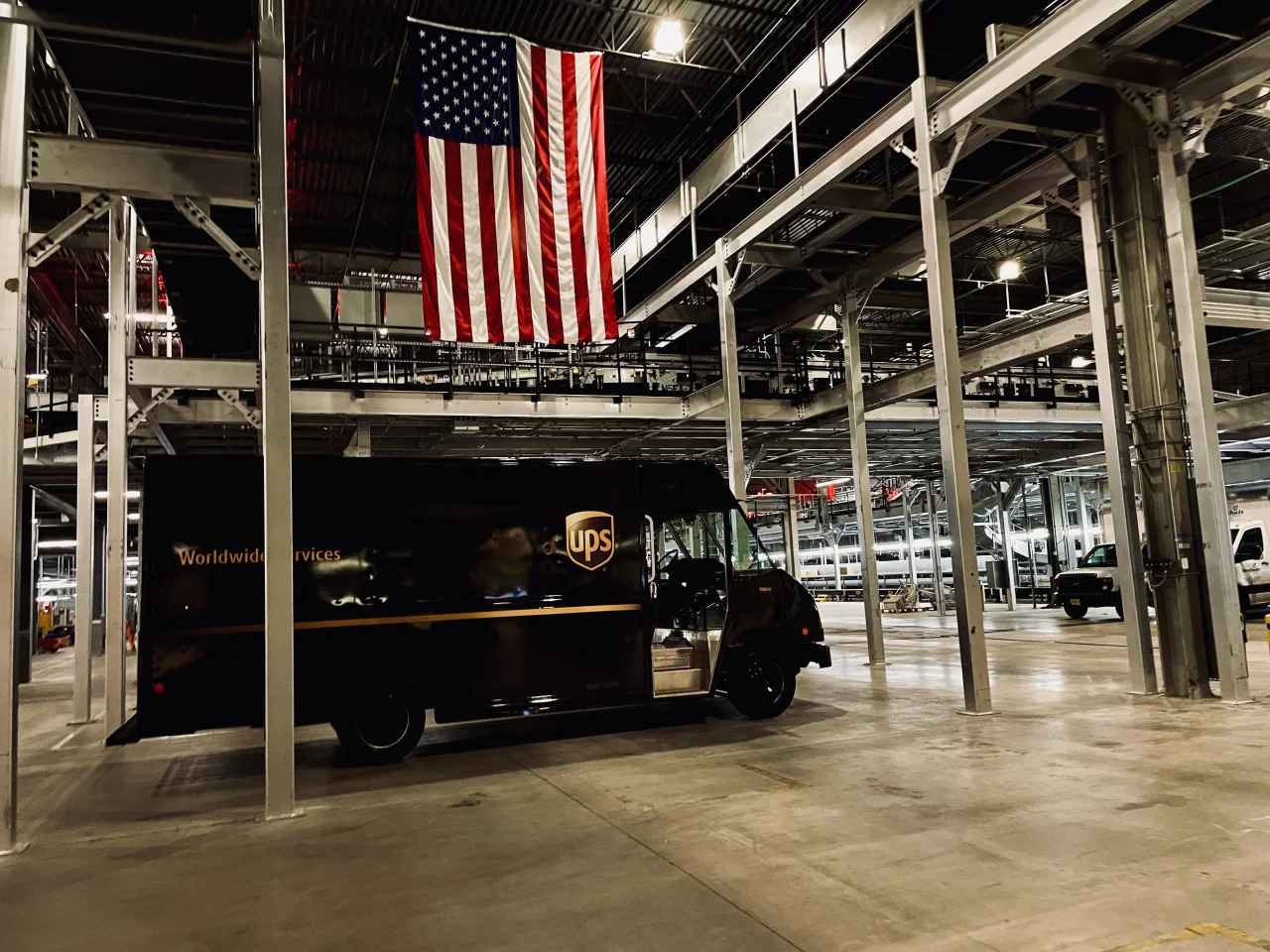
Finance associate at a Series A software company who builds and automates its reporting and forecasting workflows, saving hundreds of hours a month, and models revenue, pricing, and unit economics with the CEO and CFO. Came up through business operations at UPS, where volume and labor plans were the critical inputs to daily resource allocation across a $200 million automated facility. Master of Finance from Penn State Smeal with a BS in Economics.
Experience
Referrizer (Series A SaaS company)
RemoteStrategic Finance Associate (Contract)
Nov 2025 – Present- Supported budgeting and re-forecasting with ARR, customer acquisition cost (CAC), and capital-efficiency models
- Forecast revenue year over year, setting growth and net revenue retention (NRR) assumptions for the plan
- Modeled weekly burn, runway, and unit economics in Excel with the CEO and CFO, steering a $1M capital raise
- Managed relationships with accredited investors, fielding questions and follow-ups through the raise
- Allocated the campaign budget across dozens of vendor plans and tiers, cutting enrichment spend 34%
- Analyzed subscription pricing and set the recommended price point for a new AI product offering
- Automated recurring reporting with Python scripts and AI agents, saving 25 hours a week of manual work
- Built a research and reporting platform on a 6,000+ record SQL database, saving 300+ hours a month
- Ran diligence on an $18.7M acquisition, repricing its revenue-multiple ask against actual NRR and 3% EBITDA
- Drove adoption with SOPs at three skill tiers, no-code to Python, so the team ran the workflows independently
Apple
Bridgewater, NJSenior Technician (prior: Technical Expert, Technical Specialist, Specialist)
Oct 2021 – Sep 2025- Managed technical client relationships for four years: 90 NPS vs a 75 store goal, 340+ documented testimonials
- Cited by clients for a rare ability to distill complex information across technical and business audiences
- Resolved Tier-3 escalations for consumer and business clients across two stores, owning issues end to end
- Demonstrated high attention to detail by sustaining a 99% repair success rate for 10 months vs a 93% goal
- Turned complex technical failures into client-ready, plain-language action plans for non-technical customers
UPS
Monroe Township, NJOperations Manager
Oct 2019 – Mar 2021- Owned the operating business plan, forecasting volume, labor, and cost; delivered 92.1% effective-to-plan
- Built account-level demand forecasts, consolidating volume and destination mix into the equipment and load plan
- Budgeted and re-forecast labor hours by operational area, translating productivity into unit cost analysis
- Performed variance analysis of actual to budgeted labor hours and cost, reconciling time cards and weekly payroll
- Led daily scorecard reviews with 30+ direct reports: throughput, cost-per-piece, utilization, service levels
- Developed action plans diagnosing root causes behind throughput and service misses, returning the sort to plan
- Directed the operation to 3rd globally among UPS automated sorts in Q1 2020 from the control room
- Broke the building throughput record at 200,000+ packages, the only division operation to clear 150,000 at peak
Automation Specialist (prior: Feeder Dispatch Supervisor, Front Line Supervisor)
Sep 2017 – Sep 2019- Ran operations for the commissioning of a new automated hub, the first of its kind in the Northeast
- Stress-tested the facility to its rated spec before go-live in daily reviews with vendors and engineers
- Led a cross-functional process improvement with Industrial Engineering, lifting facility utilization from 79% to 96%
- Built analytics dashboards in Excel and Access, giving supervisors live cost and capacity visibility
- Cut rental and rail detention costs with an exception tracker that caught equipment slipping out of the network
- Pushed the facility to 16th in the world and 11th in the US among UPS automated sorts in 2019
Selected Projects
- Valuation Engine: Built an application that runs a full valuation on any US-listed company and presents a price range
- M&A capstone: Led a three-analyst sell-side M&A engagement; presented the recommendation to ownership
- Cyber breach cost model: Built a Tableau dashboard modeling the financial cost of a cyber breach
Education
Penn State University
Smeal College of BusinessMaster of Finance
May 2026Coursework
- Advanced Financial Modeling (Python)
- Financial Analysis and Valuation
- Financial Engineering and Corporate Strategy
- Strategic Financial Management
- Corporate Financial Analytical Research Projects
- Modern Portfolio Management
- Fixed Income Markets
- Fundamentals of Financial Markets
- Global Finance
- Risk Management and Compliance
- Managerial Accounting
- Quantitative Analysis for Managerial Decision Making
- Communication Skills for Management
- Global Immersion: Porto, Portugal
Penn State University
Bachelor of Science in Economics, Minor in Security & Risk Analysis
Economics
- Intermediate Microeconomic Analysis
- Intermediate Macroeconomic Analysis
- Introduction to Econometrics
- Statistical Foundations for Econometrics
- Money and Banking
- International Finance and Open Economy Macro
- International Economics
- Decision Making and Strategy in Economics
- Economics of Public Expenditures
Security & Risk Analysis
- Introduction to Security and Risk Analysis
- Informatics Risk and the Post-Modern World
- Overview of Information Security
- Legal and Regulatory Environment of IST
- Networking and Telecommunications
- Introduction to Programming
Skills
- Financial analysis
- Forecasting, budgeting, variance, profitability and pricing analysis, cost allocation, reconciliation, unit economics
- Financial modeling
- Three-statement, DCF and APV valuation, Monte Carlo, comparables, Solver optimization
- Tools
- Microsoft Excel (advanced, VBA, pivot tables, XLOOKUP), Google Sheets, PowerPoint, Power BI, Tableau, Power Apps
- Data & AI
- SQL, Python, ChatGPT, Claude, Microsoft Copilot; automated reporting and research workflows
- Certifications
- MITx Computer Science and Programming Using Python; WSP Financial Modeling Certification
- Languages
- English and Portuguese (native), Spanish (advanced)